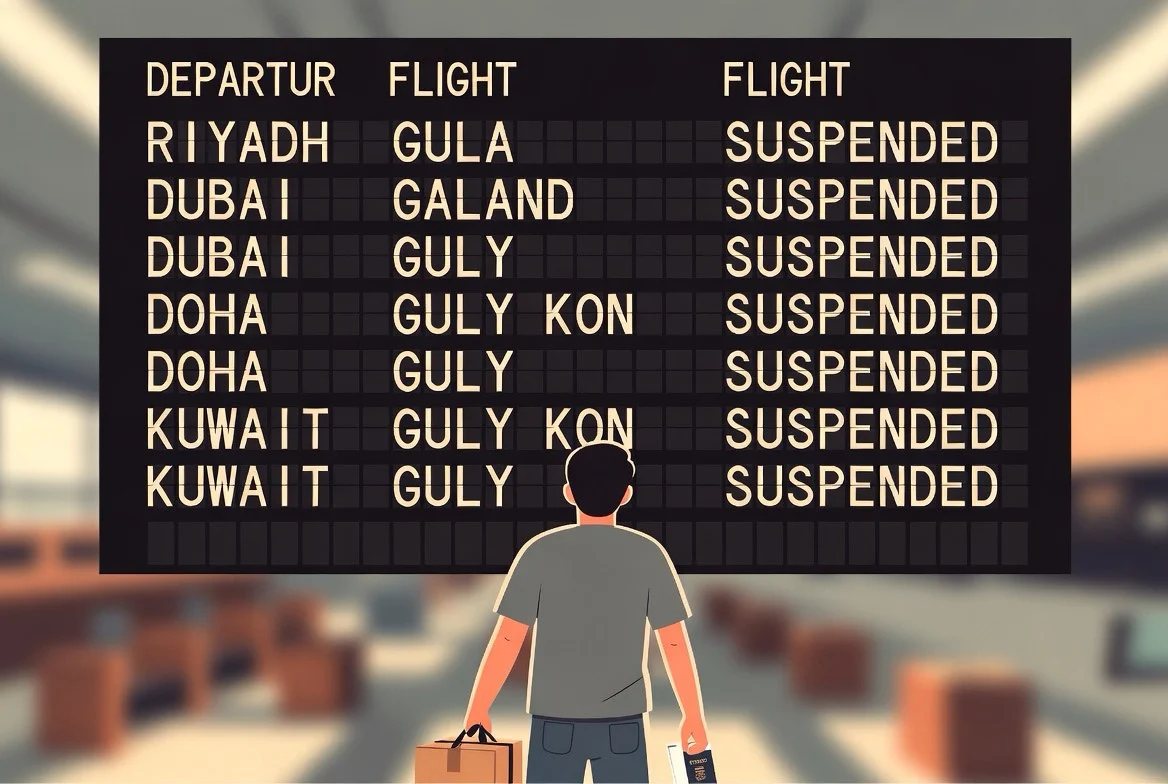
Two Headlines, One Very Confused Kabayan
If you’ve opened Facebook this month, you’ve seen both headlines.
One says: “40,000 OFWs STRANDED amid Middle East deployment BAN.” The other, from the Department of Migrant Workers itself, says: “There is no deployment ban. No one is stranded.”
Both are, in a narrow way, true — and that contradiction is exactly why so many kabayan are panicking right now. If you have a signed contract for Saudi, the UAE, Kuwait, Qatar, or Bahrain and your flight just vanished, you don’t care what the government calls it. You care about three things: Is my job still there? Is my money still mine? And what do I do this week?
This guide answers those three questions. First we’ll clear up the “ban vs. suspension” mess in plain language — because the difference changes your options. Then we’ll walk through the five things you can actually do right now, depending on which kind of stranded you are. And we’ll show you how to claim every peso of assistance the government has put on the table, because a lot of it goes unclaimed simply because nobody tells you it exists.
Reader self-routing — jump to what you need:
- Already abroad and want to come home? → Option A: voluntary repatriation
- Stuck in the Philippines with a signed contract? → Options B–E
- Just want the assistance and the money list? → How to claim every peso
Take a breath first. You have more options than the headline suggests.
What Actually Happened — A Calm Timeline
Let’s reconstruct this in plain language, because the panic version is missing the part that matters to you.
Starting around March 2026, escalating conflict across the Middle East led to airspace restrictions and a sharp drop in flights into the Gulf. The planes didn’t stop because someone in Manila signed an order. They stopped because the region became hard to fly into — and that single fact cascaded all the way down to your departure date.
Here’s the cascade: airlines cut or cancelled Gulf routes → recruitment agencies couldn’t physically send workers → people with signed contracts couldn’t board → agency accommodation centers in Manila filled up → some workers were sent back to their provinces to wait.
By early April 2026, Philstar reported an estimated 40,000+ OFWs stranded in the Philippines, unable to deploy to Saudi Arabia, the UAE, Kuwait, Bahrain, Oman, Qatar, Israel, and Lebanon. One important honesty note: that 40,000 figure is an agency-and-expert estimate, not an official headcount. I’m flagging that rather than treating a round number as gospel — but even as an estimate, it tells you the scale is real and you are not alone in this.
Two very different groups got caught in the same net:
- First-time hires who’d signed contracts and paid fees but had never left the Philippines.
- Re-hires and balik-manggagawa who came home for vacation and now can’t get back to the employer who’s waiting for them abroad.
And don’t assume this resolves in two weeks. Migration expert Emmanuel Geslani has warned that Middle East labor demand may stay soft through the second and third quarters of 2026, partly because Gulf oil refineries are entering repair cycles that cut hiring. Plan for months, not days.
The flights didn’t stop because someone signed a ban. They stopped because the planes stopped flying. That sounds like a small distinction until you realize it changes who’s responsible for you — and who owes you what.
There’s a legitimate policy debate in the background here, too: migrant-rights groups like Migrante International have long argued that deployment bans don’t fix the underlying abuses workers face abroad — they just cut off income. I’m not here to take a side on that. I’m here to help you navigate the situation you’re actually in.
”Ban” vs. “Suspension” — Why the Word Matters to YOU
This is the section no panic-headline gives you, and it’s the most useful five minutes in this article.
The DMW insists there is no formal ban. What there is, in their own words, is a suspension of deployment to several Gulf states “due to regional tensions and airspace restrictions, until further notice.” From the worker’s chair, a job you can’t fly to feels identical to a ban. But legally, the two are different animals — and the difference decides your move.
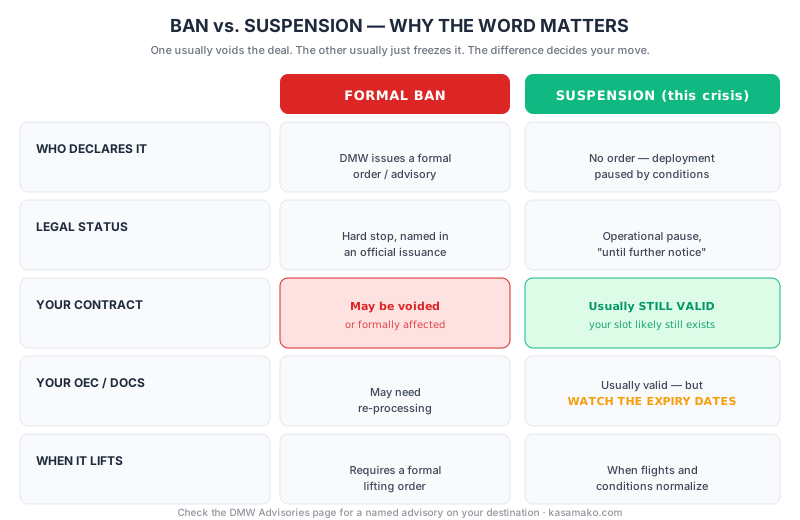
| A formal deployment BAN | A SUSPENSION (what this actually is) | |
|---|---|---|
| Who declares it | DMW issues a formal order / advisory | No formal order — deployment paused due to conditions |
| Legal status | Hard stop, named in an official issuance | Operational pause “until further notice” |
| Your contract | May be formally affected or voided | Generally still valid — your employer slot usually still exists |
| Your OEC / documents | May need re-processing | Usually still valid — but watch the expiry dates |
| When it lifts | Requires a formal lifting order | Lifts when flights and conditions normalize |
Why does the DMW insist so hard on “no ban”? Because a formal ban is a heavier instrument — it carries diplomatic weight and effectively points a finger at the host country. A conditions-based suspension is lower-stakes and reversible the moment the planes return. Agencies, meanwhile, say “ban” because to the worker the result is the same: no flight, no job, no income.
Here’s what the distinction means for you, practically:
- Your contract is most likely still alive. A suspension freezes the deal; it usually doesn’t void it. Don’t let an agency tell you your contract is “cancelled because of the ban” to dodge their obligations to you.
- Your placement and recruitment fees are still yours to protect. A suspension does not legally evaporate the money you paid. (More on this in Option E, and read the contract substitution guide for the documentation discipline that protects your money.)
- You are not automatically owed “ban remedies” — but you are eligible for the real assistance listed further down.
Check your own status in 60 seconds: go to the DMW Advisories page and search for a named advisory for your destination. If there’s a formal advisory naming your country, that’s official action. If there isn’t — just news about “tensions” and cancelled flights — you’re in a conditions-based suspension, and your contract is probably frozen, not dead.
“Ban” and “suspension” aren’t just government word games. One usually voids the deal; the other usually freezes it. Knowing which one you’re in tells you whether to wait, switch, or come home.
Which Kind of Stranded Are You?
Before the options, figure out which group you’re in — because not every option applies to everyone.
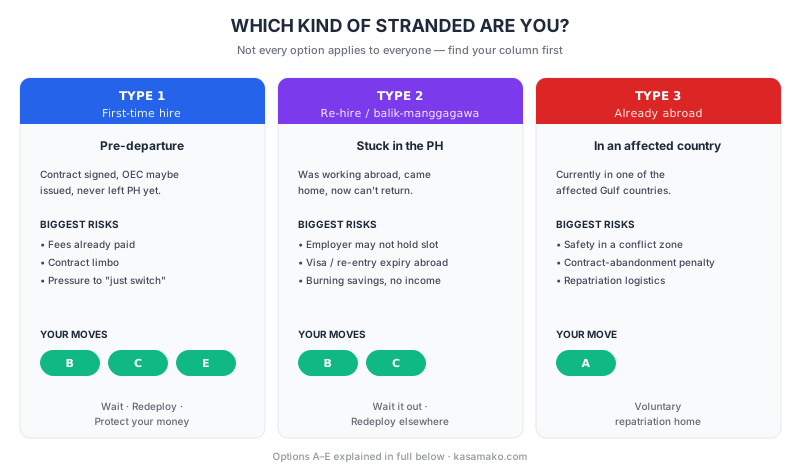
Type 1 — First-time hire, pre-departure. You signed a contract, maybe got your OEC, paid your fees — but you’ve never left the Philippines for this job. Your biggest risks: fees already handed to the agency, contract limbo, and pressure to “just switch to another country.” → Your moves: Options B, C, and E below.
Type 2 — Re-hire / balik-manggagawa stuck in the Philippines. You were already working abroad, came home for vacation or a finished contract, and now can’t return. Your biggest risks: your employer abroad may not hold your slot forever, your residency or re-entry visa abroad may expire, and you’re burning savings with no income. → Your moves: Options B and C.
Type 3 — Already abroad, worried or wanting out. You’re currently in one of the affected countries. Your biggest risks are safety, contract-abandonment penalties, and repatriation logistics. → Your move: Option A.
First 72 Hours — A Triage Checklist
Whatever type you are, do these six things this week. They cost nothing and they protect everything.
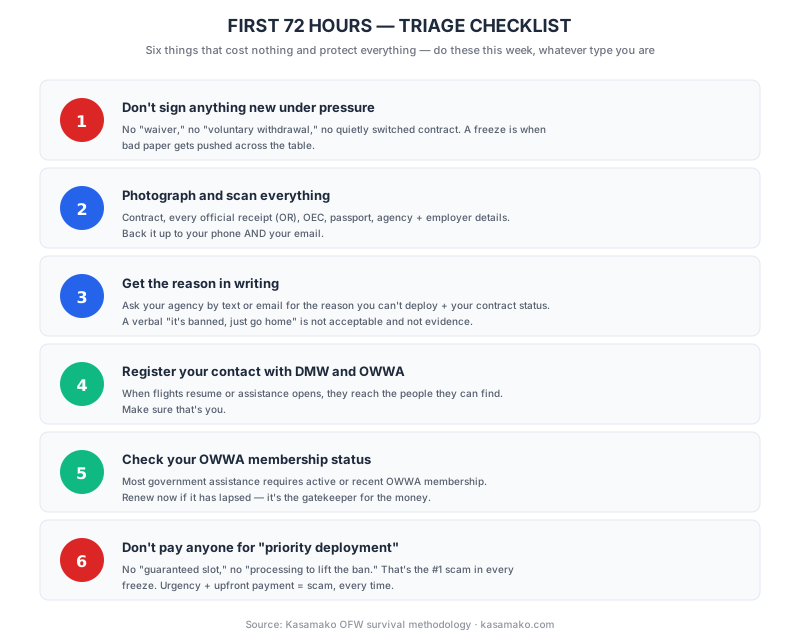
- Don’t sign anything new under pressure. Especially an agency “waiver,” a “voluntary withdrawal,” or a quietly switched contract. A freeze is exactly when bad paper gets pushed across the table. (This is the whole reason the contract substitution guide exists.)
- Photograph and scan everything. Your contract, every official receipt (OR) for fees you paid, your OEC, your passport, and your agency’s and employer’s details. Back it up to your phone and your email.
- Get it in writing. Ask your agency, by text or email, for the reason you can’t deploy and the current status of your contract. A verbal “it’s banned, Ma’am, just go home” is not acceptable and not evidence.
- Register and confirm your contact details with DMW and OWWA. When flights resume or assistance opens, they reach the people they can find.
- Check your OWWA membership status. Most government assistance requires active (or recent) OWWA membership. Renew now if it’s lapsed.
- Don’t pay anyone new for “priority deployment,” a “guaranteed slot,” or “processing to lift the ban.” That’s the number-one scam in every freeze — see the scam section below.
Option A — Voluntary Repatriation (for those already abroad)
This is for Type 3: you’re in an affected country and you want to come home.
The government is running a voluntary repatriation program, and it’s not small. As of May 28, 2026, Philstar reported that 10,132 people had been repatriated — 7,991 OFWs, 1,779 dependents, and 362 stranded Filipinos — through the DMW, OWWA, and the Department of Foreign Affairs.
- What it is: the government brings you home. The word voluntary matters — you choose this; it’s not forced on you.
- Who qualifies: OFWs and their dependents in affected countries who opt to return. Distressed and undocumented workers are prioritized.
- What it covers: the flight home plus arrival assistance — food, financial aid, medical services, transport to your home province, and temporary accommodation, coordinated through OWWA, the DFA, and the Philippine embassy.
- The tradeoff you need to understand: repatriating may mean abandoning your contract, which can carry penalties or affect future clearance. Before you board, ask the MWO (Migrant Workers Office, the office formerly called POLO) to explain the consequences for your specific contract.
- How to start: contact the nearest MWO or Philippine Embassy/Consulate and register for repatriation. (The Hong Kong 14-day guide walks through how to actually reach the right office when phone lines are jammed — the same method applies in the Gulf.)
Repatriation is a door home, not a trap door. But walking through it can end your contract — so make the MWO explain the consequences before you pack.
One data point worth knowing if you’re agonizing over this: the DMW reported that roughly half of repatriated OFWs still intend to work abroad again once conditions allow. Coming home now does not mean giving up the OFW life. It means choosing safety and a regroup over waiting it out in a conflict zone.
Options B–E — For Those Stuck in the Philippines
This is the decision core for Type 1 and Type 2.
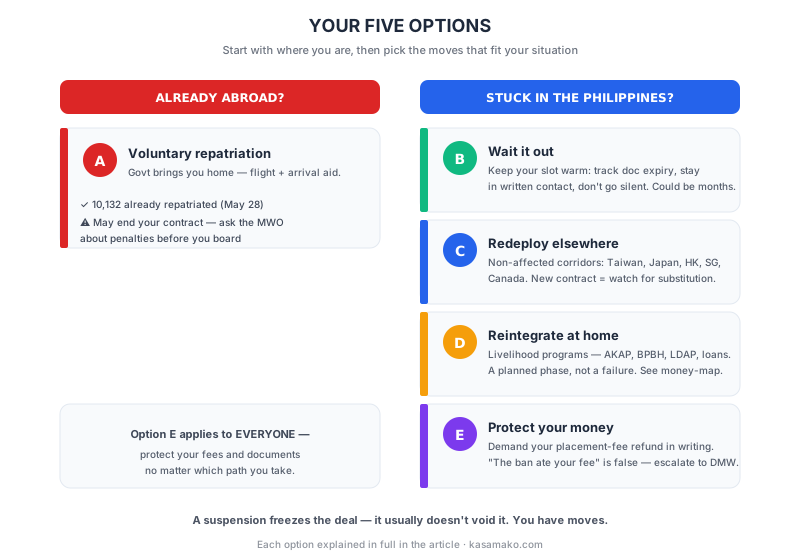
Option B — Wait it Out (keep your slot warm)
When it’s right: your employer or agency confirms the slot still exists, and the suspension is expected to be short for your specific destination.
How to wait well:
- Watch your document expiry dates. OEC, medical certificates, and visas all lapse — and re-doing them costs real money. Track the dates.
- Stay in written contact with the employer abroad. If you’re Type 2, ask them to confirm in writing that they’re holding your position. That message is leverage later.
- Don’t go silent. Agencies deprioritize workers they can’t reach when flights resume. Check in regularly so you’re top of the list, not forgotten.
The risk to be honest about: Geslani’s forecast points to soft Gulf demand through Q2 and Q3 2026. “Waiting” could mean months. Budget for that, and read the remittance-fees guide for stretching the money you do have while income is paused.
Option C — Redeploy to a Non-Affected Corridor
When it’s right: you need income now and can’t afford to wait out the Gulf.
Where to look: corridors not on the affected list — Taiwan, Japan, Hong Kong, Singapore, Canada, and parts of Europe have all continued hiring. Verify current openings through the DMW and licensed agencies before committing.
The catch: a new destination means a new contract, new fees, a fresh skills-or-language match — and a fresh opportunity for contract substitution. Don’t let an agency use your vulnerable moment to “transfer” you into a worse contract or a lower job title than what you originally signed for. A freeze is a bad time to lower your standards under pressure.
Option D — Reintegrate or Pivot at Home
When it’s right: you’re done waiting, or you were involuntarily sent home.
This is where the government’s livelihood programs come in — AKAP, Balik Pinas! Balik Hanapbuhay!, LDAP, and reintegration loans, all detailed in the next section. The DMW’s own framing helps here: their planned “Reintegration 2.0” treats coming home as a designed phase of the OFW journey — with job-matching, reinvestment, and even psychosocial support — not as a failure. As of late May 2026, the DMW reported that 34,429 Filipinos had already received financial assistance to recover and reintegrate. That help is meant for you — claim it.
Option E — Protect Your Money & Contract Rights
This one applies to everyone, and it’s the option people forget when they’re scared.
- Recruitment and placement fees: if you can’t deploy through no fault of your own, you are generally entitled to a refund of placement fees. Demand it in writing. If the agency refuses, escalate to the DMW.
- Don’t accept “the ban ate your fee.” A suspension doesn’t legally make your money disappear. That line is an agency protecting its cash flow, not a legal fact.
- File a complaint with the DMW if an agency withholds your documents, refuses a refund, or pressures you into a waiver. Your scanned ORs and that written “reason you can’t deploy” (from the 72-hour checklist) are your evidence.
How to Claim Every Peso of Assistance
This is the highest-value section in the article, because most of this money goes unclaimed — not because people don’t qualify, but because nobody lists it all in one place.
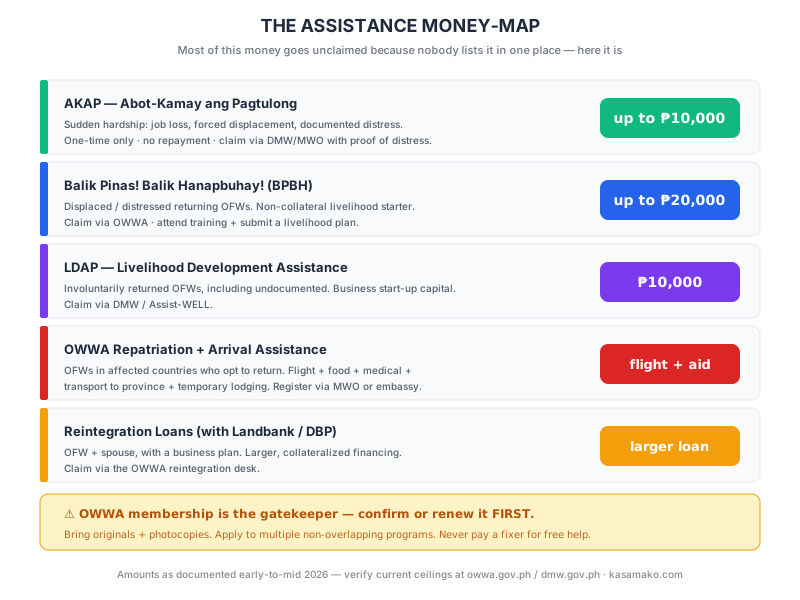
| Program | What you get | Who’s eligible | How to claim |
|---|---|---|---|
| AKAP (Abot-Kamay ang Pagtulong) | One-time emergency cash grant, up to ₱10,000, no repayment | OFWs in sudden hardship — job loss, forced displacement, documented distress | Through DMW/MWO; bring proof of distress + OFW documents |
| Balik Pinas! Balik Hanapbuhay! (BPBH) | Livelihood starter package, up to ₱20,000, non-collateral | Displaced or distressed returning OFWs | Through OWWA; attend training + submit a livelihood plan |
| LDAP (Livelihood Development Assistance) | ₱10,000 business start-up capital | Involuntarily returned OFWs, including undocumented | Through DMW / Assist-WELL |
| OWWA repatriation + arrival assistance | Flight home + food + medical + transport to province + temporary lodging | OFWs in affected countries who opt to return | Register through the MWO or embassy |
| Reintegration loans (with Landbank / DBP) | Larger collateralized business loans | OFW and spouse, with a business plan | Through the OWWA reintegration desk |
| Bayanihan para sa Balikbayang Manggagawa | Job-matching + reinvestment + psychosocial support via a 22-agency network (launched Apr 2026) | Repatriated and returning OFWs | Through DMW reintegration network and job fairs |
A few hard-won practical tips for actually getting the money:
- OWWA membership is the gatekeeper for most of these. Confirm or renew it first, before you apply for anything else.
- Bring originals and photocopies of: passport, contract, OEC, your OWWA OR, proof of distress, and a valid ID. Missing one document is the most common reason claims stall.
- Apply to multiple non-overlapping programs. A cash grant (AKAP) and a livelihood starter (BPBH) are usually separate buckets — you can pursue both if eligible.
- One important limit: AKAP is generally a one-time grant. If you already received it in a previous displacement, you’re usually barred from a second. Plan around that.
- Beware fixers charging you to “process” assistance that is free to apply for. Every program above is free to apply to. Anyone charging a fee to unlock free help is the scam.
⚠️ Amounts and eligibility rules change. The figures above reflect the programs as documented in early-to-mid 2026 — always confirm the current ceiling on the official OWWA and DMW sites before you count on a number.
The Scams That Bloom in Every Freeze
Deployment freezes are scammer season. The desperation is real, so the predators come out. Here are the patterns:
- “Pay ₱X for priority deployment when the ban lifts.” There’s no such thing. Deployment order isn’t for sale.
- “Switch to [country] now, slots are closing!” High-pressure redeployment into a worse contract, timed to your panic.
- “We’ll process your refund — for a fee.” Your refund is free to demand. Anyone charging to “release” it is robbing you twice.
- Fake repatriation “facilitators.” Repatriation is government-run and free. Nobody legitimate charges you to come home.
- Social-media “agencies” with no DMW license. Verify any agency’s license on the DMW site before you hand over a single peso.
The tell never changes: legitimate assistance never asks for an upfront fee. Urgency plus an upfront payment equals a scam, every single time.
Every deployment freeze grows a crop of fixers. The rule never changes: if someone asks you to pay to receive help that’s supposed to be free, they’re the emergency — not the ban.
A Note on Where This Is, and Isn’t, Going
Let me be straight about what this article is. It’s a snapshot, clearly dated. The numbers in it — the 40,000 estimate, the 10,132 repatriated as of May 28, the 34,429 who’ve received aid — describe the situation at a specific moment, and every one is sourced inline so you can check whether it’s still current when you read this. The conflict, the suspension, and the flight situation will keep moving. The process in this guide — how a suspension differs from a ban, your five options, how to claim assistance, how to spot the scams — is what stays true whenever a freeze hits your corridor, this year or the next.
If there’s one thing I’m building toward with Kasamako, it’s relevant here: the single most common way workers lose money in a freeze is signing a switched or downgraded contract under pressure, in a hurry, while scared. The Contract Reviewer tool I’m developing is meant to catch exactly that. It’s still in development — if you want to know when it ships, you can join the early-access list. No spam, no fee, no catch.
For now: breathe, document everything, claim what’s yours, and don’t pay anyone to do for free what the government already offers.
Resources
Official channels:
- DMW — Advisories — check here for a named advisory on your destination
- DMW main site
- OWWA — Balik Pinas! Balik Hanapbuhay!
- OWWA main site
- DFA and your nearest Philippine Embassy / MWO — for repatriation and on-site help
Related reading on Kasamako:
- Contract Substitution: How to Spot Switched OFW Contracts — essential for Options C and E
- Saudi Arabia’s Kafala System in 2025 — context for the largest affected corridor
- Hong Kong’s 14-Day Rule Trap — a redeployment corridor, and how to reach an MWO
- The 3 Hidden Fees in Every Philippines Remittance Service — managing money while income is paused
Kasamako (in development):
I’m building Kasamako because the OFW community deserves calm, accurate guidance when the headlines get loud. I’m a software developer, not a lawyer or a licensed recruitment agency, and this article is educational, not legal advice.
A note on the numbers: this is a developing story. The 40,000 stranded figure is an agency-and-expert estimate, not an official count — I flag that rather than pass it off as confirmed fact. The DMW maintains there is no formal “ban”; I use the word in the title because it’s the term people are searching, and I explain the distinction in full above. All figures are sourced inline and describe the situation as of late May 2026.
No affiliate links. No paid placements. If your destination, agency, or assistance experience differs from what’s here, email me — corrections keep this useful for the next kabayan.
Ingat lagi.