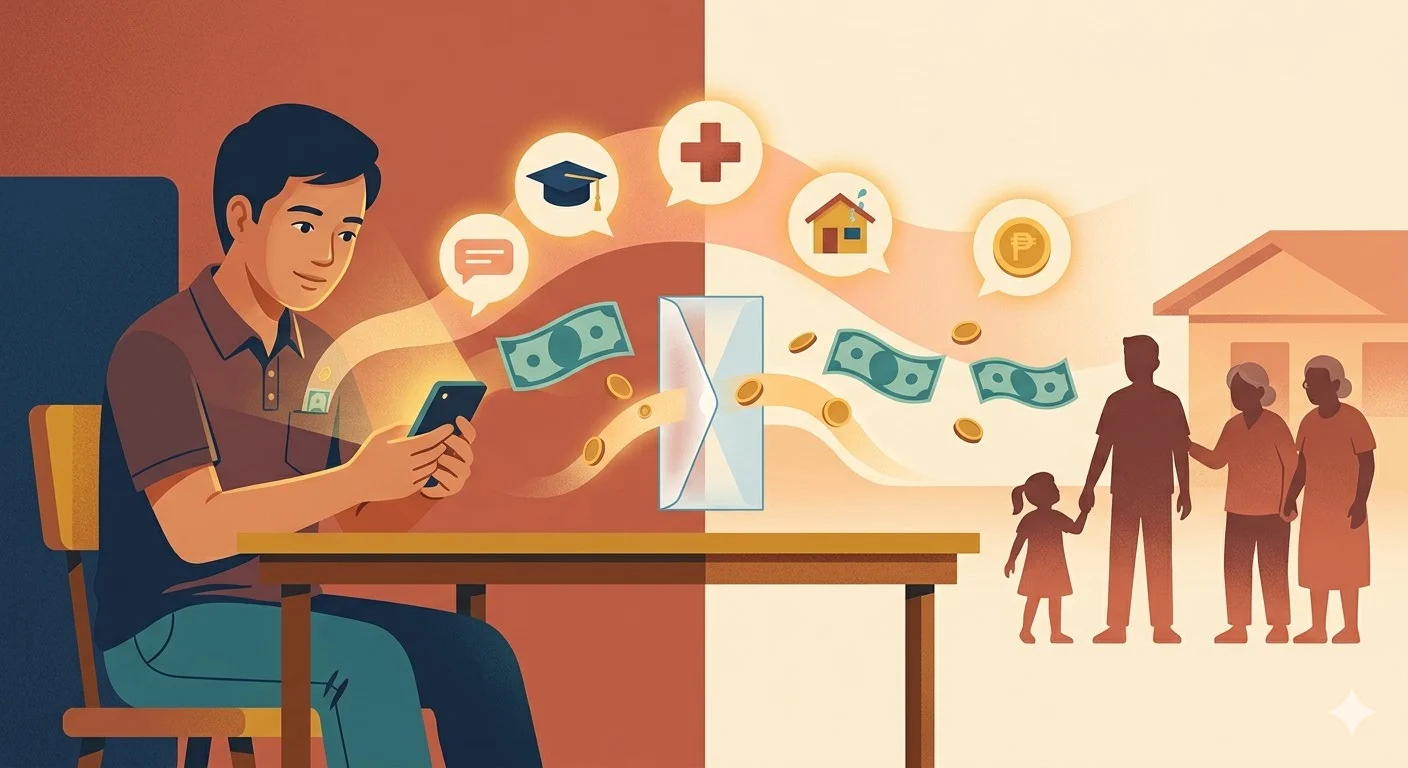
Every Payday, the Messages Start
A cousin’s tuition. A tito’s hospital bill. A “pa-load lang.” A leaking roof. Each one is real. Each one, on its own, you can afford. And that’s exactly the trap — because “I can afford this one” is a sentence you say two hundred times until the year is over and your own account is empty.
You are not a bad saver. You are not weak. And your family is not greedy. What you are is a system with no walls — money flows in and flows straight back out, on demand, with no plan deciding where any of it goes. People call this being the “family ATM.” But an ATM at least keeps a balance. You don’t even get that.
Here’s the part nobody says out loud: staying the ATM is not the loving choice. It feels like love. But a machine that dispenses cash on request creates dependents, not a stronger family. The most generous thing you can build is a family that one day doesn’t need the machine — and that has to start with you keeping some of what you earn.
This article is not “say no to your family.” It’s the opposite. It’s how to keep sending the love, on purpose, with a structure that doesn’t end with you at sixty with nothing to show for twenty years abroad.
Jump to what you need:
- Run your lifetime number — the math nobody does
- Why “just say no” doesn’t work for Filipinos
- The Fixed Family Budget — the whole method, in one move
- Pay yourself first
- The three-bucket system
- Build a family that graduates off the ATM
Run Your Lifetime Number
OFWs sent home a record US$34.49 billion in cash in 2024 — about 8.3% of the entire country’s economy, according to the Bangko Sentral ng Pilipinas (BSP). That money built houses, finished degrees, paid for surgeries. It is the single most powerful force for good in the Philippines. None of what follows says otherwise.
But here is the number that should stop you: in the BSP’s own household survey, only about 35.5% of remittance-receiving households set aside any portion for savings, and just 6.5% put anything toward investment (Consumer Expectations Survey, Q1 2025). The rest goes to food, education, medical bills, and “consumer durables.” All real. All necessary. And all consumed — gone the moment it lands.
Now make it personal. Take what you send home in a typical month and multiply it by the months you’ve been abroad:
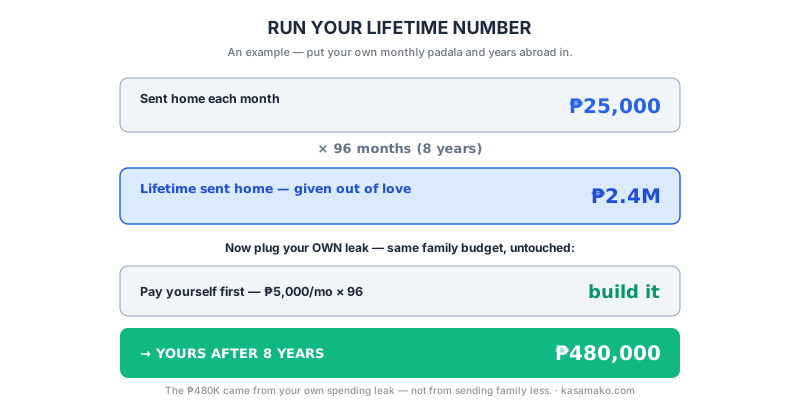
Say it’s ₱25,000 a month for 8 years. That’s ₱2.4 million you have moved home — a genuine fortune, given out of love. The problem was never the amount. The problem is that every peso of it was assigned its job reactively, request by request, under emotional pressure — and not one peso was ever assigned to your own future before the rest flowed out.
Hold that 8-year, ₱2.4M picture. We’ll come back to it, because the fix below builds you ₱480,000 over those same years without sending your family a single peso less.
Lifestyle Inflation Runs in Both Directions
“Lifestyle inflation” is the quiet way spending rises to swallow any increase in income. Get a raise, and somehow you’re not richer — the new phone, the bigger apartment, the nicer car all arrive to absorb it. For an OFW, this happens at both ends of the remittance pipe at once, which is why the middle — you — gets squeezed to zero.
Back home, the requests creep up as your income becomes known. The first year it’s groceries. By year three it’s tuition for two cousins, the fiesta, a sari-sari store that never quite turns a profit, and a standing assumption that you’ve got it. Each step up feels small. Together they reset the baseline permanently.
Abroad, your own spending creeps up too, and this is the half nobody talks about. You’re far from home, you work brutal hours, and “I deserve this” becomes the most expensive sentence in your vocabulary — the newer phone, eating out instead of cooking, the upgraded room, the night out that resets the week’s budget. It feels like a reward. It’s a leak.
Here’s the liberating part: the money for your future doesn’t have to come from your family’s share. It can come from your own leak. That’s the ₱5,000 in the calculation above. You plug your end, not theirs — and the guilt evaporates, because nobody back home loses anything.
Why “Just Say No” Fails for Filipinos
Most money advice you’ll find online was written for a culture that treats “no” as a clean, neutral word. Set a boundary. Say no. Done. That advice will get you nowhere, because for a Filipino the cost of “no” isn’t financial — it’s relational, and it’s enormous.
Utang na loob — the debt of gratitude — is real and it is not a flaw. Your parents went without so you could eat; pakikisama keeps the family whole; the sandwich generation carries both the elders and the young at once. When a relative asks and you refuse, you are not declining a transaction. You are spending social capital you may need when you’re the one in crisis. People who tell you to “just set a boundary” have never had to weigh that.
So we are not going to say no. We’re going to change the structure of yes.
The shift is this: stop deciding per request, in the moment, under pressure — and start deciding once, in advance, while you’re calm. When there’s no system, every single message is a fresh emotional negotiation you will usually lose. When there’s a system, the answer was decided weeks ago, by a calmer version of you, and the conversation stops being “do you love me enough?” and becomes “here’s how our family’s support works.”
The Fix Is a Number, Not a Feeling
This is the whole method, and it’s almost embarrassingly simple: decide your monthly family-support figure once, in advance, and make it a fixed line item — like rent.
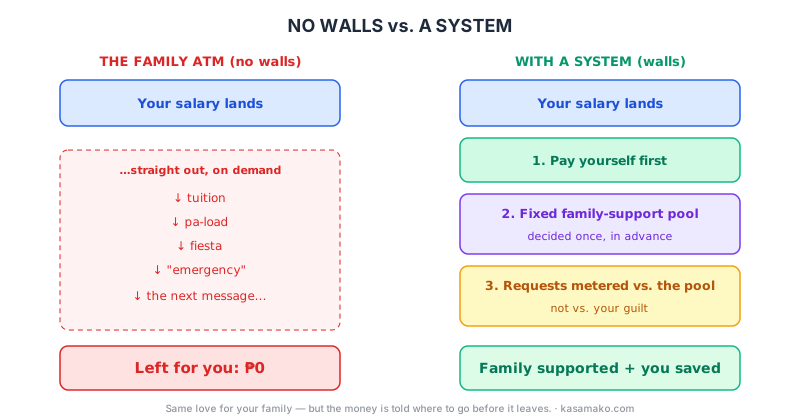
Pick the number deliberately. Look at what your family genuinely needs each month, weigh it against what you can sustain while still paying your future first, and commit to it. Maybe it’s ₱20,000. Maybe ₱30,000. The exact figure is yours — what matters is that the number exists before the requests do.
Now the magic: every incoming request gets measured against that pool, not against your guilt. When the pool for the month is committed and another “small” ask arrives, you are no longer rejecting your cousin — you’re reporting a fact: “The support budget for this month is already out. Let’s plan for next month.” You’re not a bad person who said no. You’re a person running a household budget, which is exactly what you are.
Tell your family the number, plainly and warmly, once: “I want to support you every month, reliably, so I’ve set aside a fixed amount for the family. You can count on it. It’s steadier than me guessing each time.” Most families hear “you can count on it” louder than they hear the cap. Reliability is its own gift.
Pay Yourself First, Before the Padala
A budget on its own won’t survive contact with a payday and a guilt trip. You need one mechanical habit underneath it: your savings come off the top, automatically, before the family budget and before your own spending — not from whatever’s left at the end.
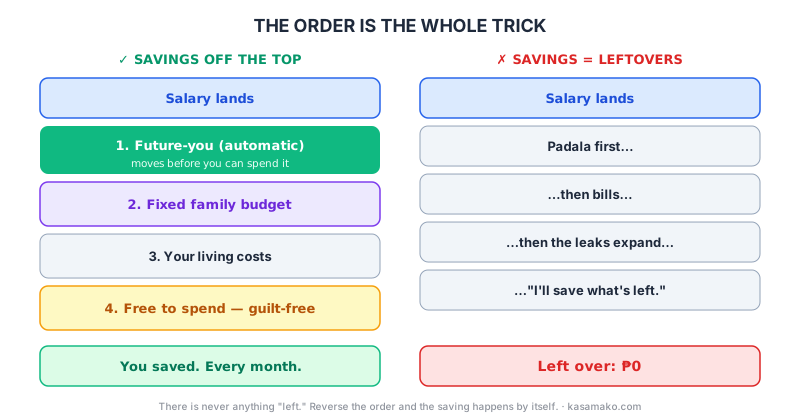
The order is the entire trick. “I’ll save whatever’s left after I send the padala and pay my bills” is how every OFW ends up with ₱0 saved — because there is never anything left; the leaks expand to consume it. Reverse the order. The day your salary lands, the savings move first — ideally by automatic transfer so you never see it as “spendable” — and then the family budget, and then you live on the rest.
Where you put it is genuinely secondary to the habit of putting it somewhere it’s hard to grab impulsively. One boring, government-run option many OFWs use is the Pag-IBIG MP2 program — a voluntary 5-year savings facility, government-guaranteed, that has paid a dividend of around 7% tax-free in recent years (the rate is declared annually, not promised), with a ₱500 minimum and OFWs explicitly eligible (Pag-IBIG Fund). Voluntary SSS membership keeps your own pension building while you’re away. I’m naming these only as examples of “boring, yours, and hard to impulse-spend” — not as recommendations. Check your own eligibility and decide for yourself.
Three Buckets: Support, Emergency, Wants
Not every request is the same kind of request, and treating them all the same is how the budget breaks. Sort every incoming ask into one of three buckets — before you answer.
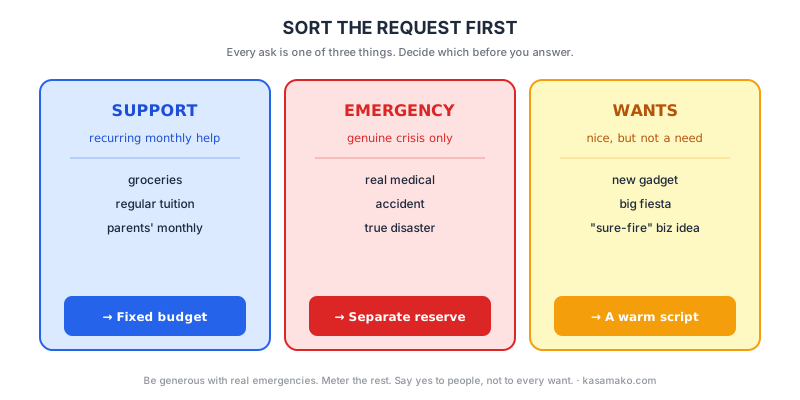
Support (the fixed budget). Recurring, expected help — groceries, regular tuition, the monthly contribution to your parents. This is your Fixed Family Budget, already decided. No negotiation needed; it just flows.
Emergency (a separate reserve). A genuine medical crisis, an accident, a real disaster. These are why you keep an emergency fund that is yours and separate — so a true crisis doesn’t have to blow up the whole system or raid your future. Real emergencies are rare. Be generous here, because this is what the buffer is for.
Wants (a script, not a reflex). The new phone, the cousin’s “sure-fire” business idea, the extravagant fiesta, the upgrade that isn’t a need. These don’t get an automatic yes and they don’t get a cold no. They get a warm, face-saving script:
“That sounds like a great goal. It’s not something I can take out of the family budget this month, but let’s figure out a way to save toward it together.”
You’ve said no to funding it on demand without saying no to them. You’ve stayed in the relationship and out of the trap.
Build a Family That Graduates Off the ATM
The deepest fix isn’t a budget at all. It’s a change in what “support” is for. An ATM dispenses forever. The goal is support with a finish line — money aimed at making the next ask unnecessary.
- Time-bound, not open-ended. “I’ll cover my sister’s last two years of nursing school” ends at graduation — and then she earns. That’s an investment in independence. “I’ll just keep sending whatever’s needed, forever” has no endpoint and builds nothing.
- Capital, carefully — or not at all. Funding a relative’s business can create a real second income for the family. It can also be the single biggest ATM leak there is. Be honest: a one-time capital injection into a tested, real income source is investment; topping up a “business” that has lost money for three years is just a more expensive padala. If you wouldn’t put your own savings into it as a stranger, you’re not investing — you’re being asked again.
- Your own future is part of the family plan. The version of you that retires with savings is the version that isn’t a burden on your own kids someday. Paying yourself first isn’t selfish. It’s you refusing to become the next generation’s monthly request.
A family that graduates off the ATM is the most loving thing money can build. It just takes longer than a transfer.
Windfalls: the 13th Month and the Bonus
Lump sums — the 13th-month pay, an annual bonus, end-of-contract back pay — vanish faster than regular salary, because they feel free. They were never in the monthly budget, so they don’t feel like “real” money, and they’re gone before you’ve decided anything.
Decide the split before it lands. A simple pre-commitment — for example, a fixed share to future-you, a share to the family, and a genuinely guilt-free share for yourself — turns a windfall from a disappearance into a step forward. The rule matters more than the exact percentages. Anything decided in advance beats anything decided while the money is burning a hole in your account.
What This Is Not
Let’s be honest about the limits, because pretending a system fixes everything is its own kind of lie.
This will not make you selfish. Putting yourself on the list is not the same as taking your family off it.
This will not fix a genuine family crisis overnight, and it’s not meant to. Some months a parent will be sick and you will pour everything you have at the problem and break every rule in this article — and that will be the right thing to do. The system isn’t for those months. It’s for the other ninety percent, so that when the real crisis comes, you actually have something to pour.
And this is educational commentary from someone building tools for OFWs — not financial advice, and definitely not a sales pitch. Nobody here is selling you a savings product.
Frequently Asked Questions
How much should I send home? There’s no universal number — it depends on your family’s real needs and what you can sustain after paying your own future first. The point of this article isn’t a magic percentage; it’s that you decide the figure once, in advance, while calm, and make it a fixed monthly line instead of negotiating it under pressure every payday.
How do I tell my family I’m cutting back? Reframe it from “less” to “reliable.” Tell them you’ve set a fixed monthly amount they can count on, every month, without fail. Most families value a dependable, predictable figure more than an unpredictable one that’s sometimes bigger. You’re not cutting them off — you’re making your support steadier.
Is it selfish to save when my family still needs money? No. The version of you with savings is the one who can survive a job loss, handle a real emergency without going into debt, and avoid becoming a burden on your own children later. Saving a portion isn’t taking from your family — in the long run it’s protecting them from a future crisis that has no buffer behind it.
Where should an OFW even keep savings? Somewhere boring and hard to impulse-spend. Many OFWs use government-run options like Pag-IBIG MP2 or voluntary SSS, precisely because they’re not one tap away on a banking app. That’s an example, not advice — check your own eligibility and what fits your situation.
What Kasamako Is Building
I write these because OFW money decisions are made alone, far from home, usually under pressure — and that’s exactly when a clear framework helps most. Kasamako is my attempt to make that less lonely: plain answers about your own money, no jargon, no one selling you anything. If you want to know what ships next, join the early-access list. No spam, no selling your data.
Sources and a Word About Me
The data behind this piece:
- BSP — Overseas Filipino Cash Remittances — the record US$34.49B (2024) and the share-of-GDP figure
- BSP Consumer Expectations Survey, Q1 2025 — how remittance-receiving households actually allocate the money (only ~35.5% to savings, ~6.5% to investment)
- Pag-IBIG MP2 Savings and SSS — named only as government-run examples, not recommendations
Related reading:
- The 3 Hidden Fees in Every Philippines Remittance Service — saving on the transfer is pointless if there’s no plan for the money once it lands
- OFW Property Buying Mistakes in the Philippines — property back home can be the graduation plan, but only if the title, math, and family-name risks are clean
- POEA Placement Fee: What’s Legal and How to Recover an Overcharge — got money back from an agency? Here’s how to keep it from leaking straight out again
- Contract Substitution: How to Spot Switched OFW Contracts — the salary on paper is the salary your whole budget depends on
Kasamako (in development): Join the early-access waitlist
I’m building Kasamako because OFWs deserve clear answers about their own money. I’m a software developer, not a financial advisor or a licensed broker, and this article is educational, not financial advice. Government program details (MP2 dividends, SSS rules) change and dividend rates are declared yearly, not guaranteed — confirm the live details before acting, and decide what fits your own situation.
No affiliate links. No paid placements. No one here is selling you a savings product.
Mahalin mo sila — pero isama mo ang sarili mo sa listahan. (Love them — but put yourself on the list, too.)
Ingat lagi.
Comments