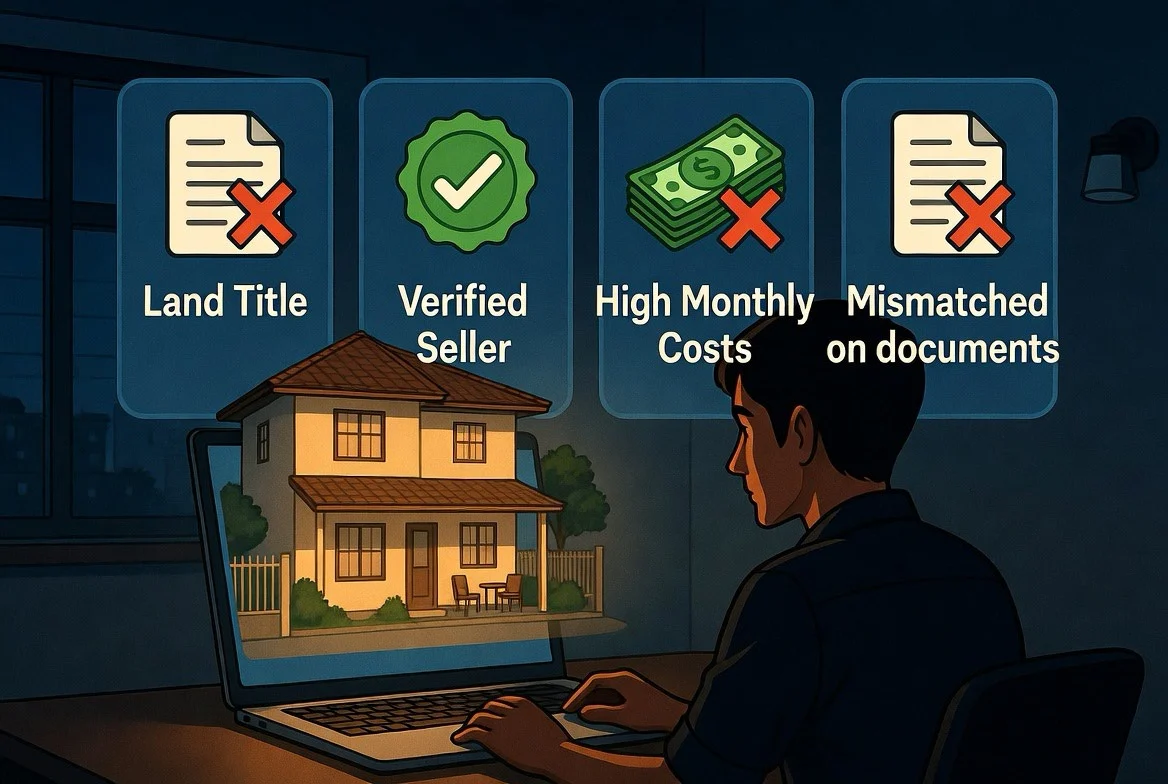
The Dream Breaks in Four Quiet Places
The mistake usually starts before the contract. It starts with the photo.
A two-storey house with a gate. A condo lobby with polished tiles. A lot in the province where your mother says, “Dito na tayo kapag umuwi ka.” After years abroad, the picture feels like proof that the sacrifice is becoming something you can touch.
But property does not fail in one dramatic moment. It fails in four quiet places: the title, the seller, the monthly math, and the name on the documents. Miss one, and the house can become a second job you are paying for from another country.
This guide is not here to kill the dream. It is here to make the dream survive the paperwork.
Jump to what you need: title, seller records, pre-selling, monthly cost, name and authority, or the 30-minute check.
This is educational, not legal, tax, or investment advice. Property facts are local and document-specific.
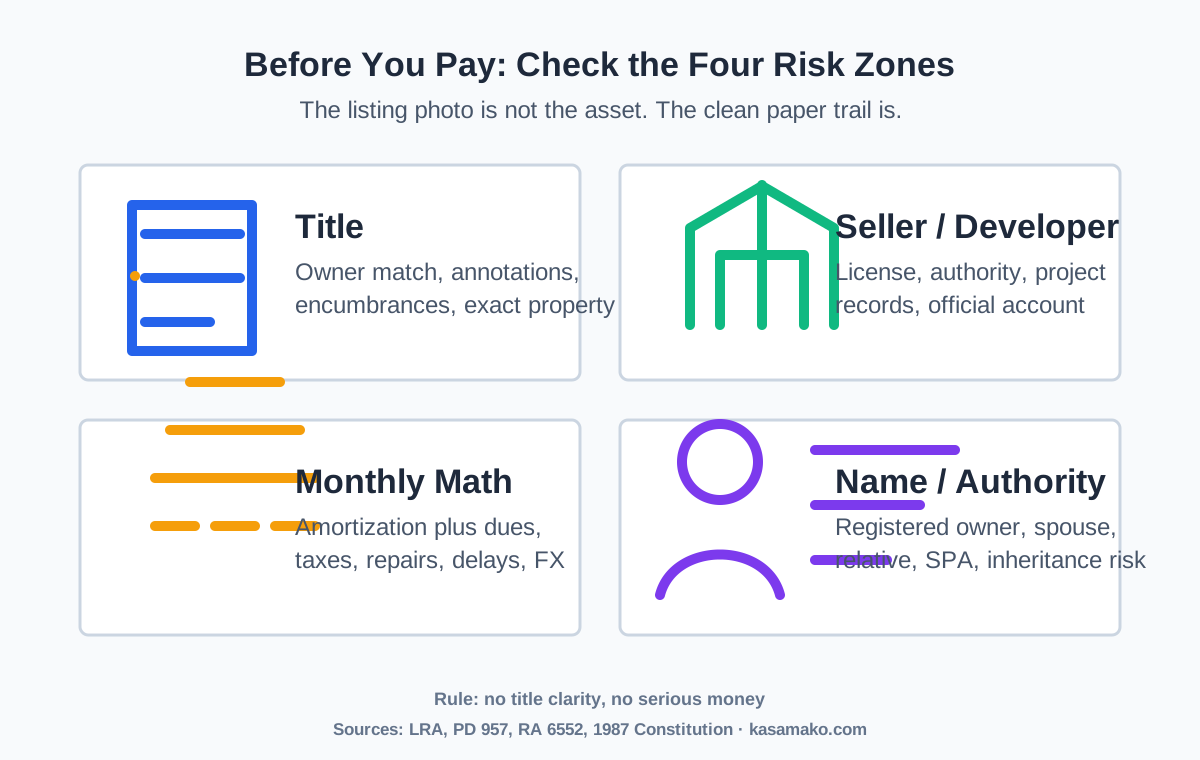
Mistake 1: Falling in Love Before Checking the Title
The listing is not the asset. The clean title is the asset.
Before you treat a house, lot, or condo as “yours soon,” verify what is actually being sold. Philippine land registration records sit with the Land Registration Authority and the local Registry of Deeds. The LRA publishes a Registry of Deeds directory and an eSerbisyo portal as official entry points.
Your first pass:
- What kind of title is involved: original, transfer, or condominium certificate?
- Does the registered owner match the seller?
- Does the property description match the listing?
- Are there mortgages, liens, adverse claims, annotations, or other encumbrances?
- Is the title copy recent enough to be useful?
- Do the tax declaration, location, and seller story line up?
Do not let anyone answer those questions with a screenshot from a sales chat. Ask for a certified true copy or the appropriate official record check, then have someone competent read it. If you are abroad, that “someone” should not only be the relative who likes the house.
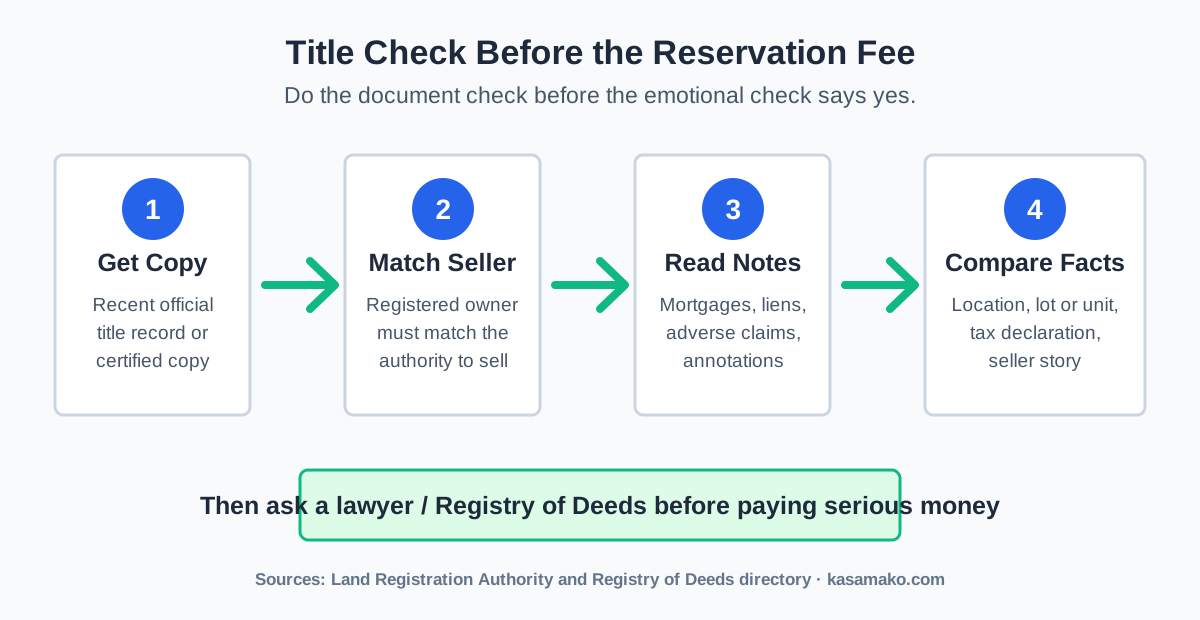
Your rule: no title clarity, no serious money.
Mistake 2: Trusting the Seller More Than the Records
A friendly seller can still be wrong. A polished showroom can still hide missing approvals.
Presidential Decree No. 957 regulates subdivision lots and condominium units. It requires project registration and says a registration certificate does not itself authorize selling unless the owner or dealer has obtained a license to sell (PD 957, Sections 4-5). It also requires a performance bond before a license to sell is issued (PD 957, Section 6).
That matters because the sales conversation often happens at speed: a Facebook ad, a mall booth, a Viber group, a relative’s referral, a limited-time reservation fee.
Ask for:
- the developer or seller’s legal name;
- the project name and exact location;
- the license to sell or project approval details for subdivision or condominium projects;
- the agent’s authority to sell;
- the contract, reservation agreement, and payment schedule;
- the bank or official company account where payments must go;
- official receipts.
Do not accept “we are processing it” as the same thing as “here is the record.”
Mistake 3: Buying Pre-Selling Like It Is Finished
Pre-selling property is not the same as buying a finished unit. You are buying a promise with a schedule, a developer, and a contract behind it.
That can be legitimate, but the showroom is finished while the unit is not. The amenities are in the brochure. The turnover is in the future. Your job abroad, exchange rate, family needs, and visa status all have to survive until delivery.
PD 957 is useful here because it treats marketing promises seriously. It says advertisements and sales propaganda must reflect real facts and not mislead, and that they form part of the sales warranties (PD 957, Section 19). It also requires promised facilities to be constructed or provided within the relevant period (PD 957, Section 20). The same law addresses buyer remedies when a developer fails to develop according to approved plans and time limits (PD 957, Section 23).
Ask:
- What is promised in the brochure, contract, and approved plan?
- What is the target turnover date, and what happens if it is delayed?
- Can the developer change unit size, layout, amenities, or schedule?
- What payments are due before and after turnover?
- What if your overseas contract ends first?
- What cancellation or refund rules apply to your contract?
Buy the future unit using the contract’s worst month, not today’s optimism.
Mistake 4: Calculating Only the Monthly Amortization
The monthly amortization is not the monthly cost.
An agent may show a number that feels possible: “Only this much per month.” That number can be real and still incomplete.
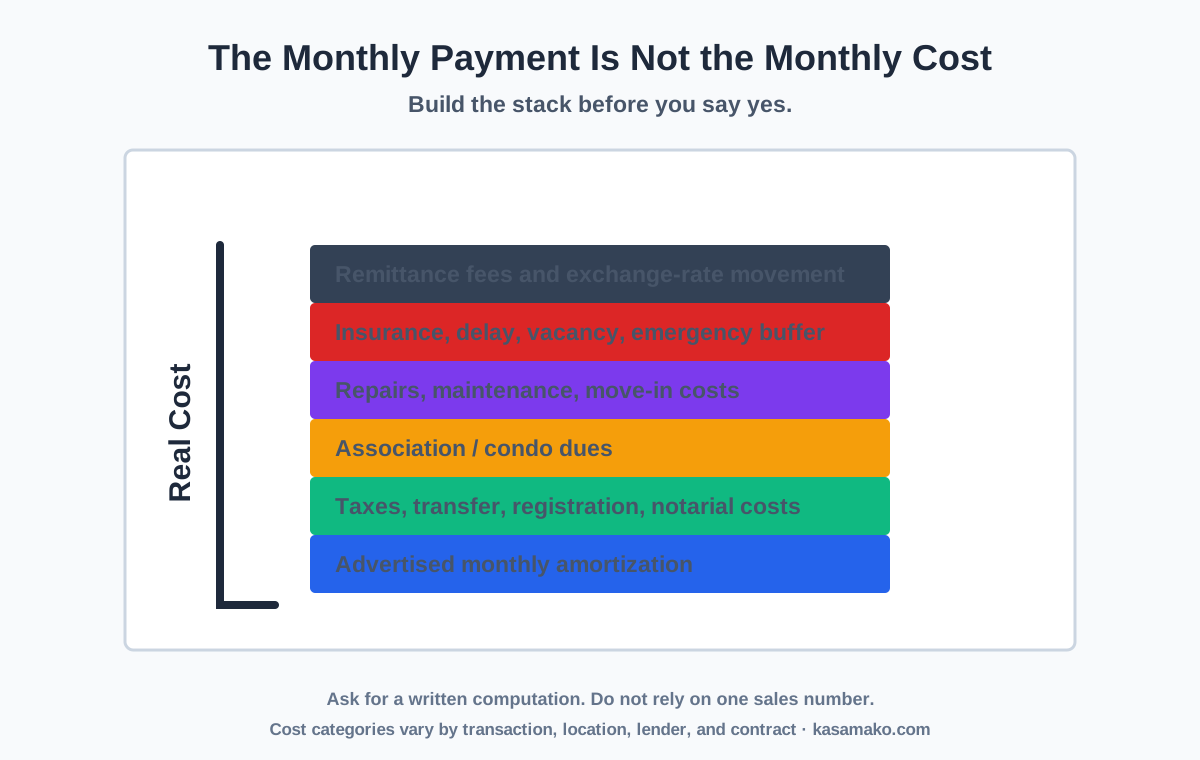
Build your cost stack:
- reservation fee and equity payments;
- transfer, registration, notarial, and documentary costs;
- real property tax and local charges;
- association dues or condominium dues;
- insurance;
- repairs, maintenance, and move-in costs;
- bank fees, repricing risk, and payment charges;
- remittance costs and exchange-rate movement;
- family inspection costs;
- vacancy or delayed turnover.
I am deliberately not giving tax rates here because those depend on the transaction, location, contract terms, and who is legally assigned to pay. Get a written cost computation, then stress-test it.
Ask yourself:
- Can I still pay if my overseas income drops for three months?
- Can I still pay if the unit turns over late?
- Can I still pay if my renter leaves or the family member living there cannot contribute?
- Can I still save for my own emergency fund while paying this?
If the answer depends on every month going perfectly, the property is too tight. For the family-budget side, read OFW Lifestyle Inflation: How to Stop Being the Family ATM before adding a mortgage to the same income.
Mistake 5: Putting the Property in the Wrong Name
This is the mistake that sounds practical at first: put the property under a sibling, parent, or spouse because you are abroad. Sometimes the reason is innocent. But the name on the documents is not a small detail. It shapes who can sell, mortgage, inherit, dispute, or prove ownership later.
If the property is not in your name, ask:
- What exactly proves that I paid?
- What exactly proves the property is for me?
- Can the registered owner sell or mortgage it without me?
- What happens if the registered owner dies, separates, gets into debt, or has a dispute?
- What written authority does my representative have, and what are they allowed to sign?
Foreign spouse or partner situations need extra care. The 1987 Philippine Constitution restricts transfer of private lands to persons or entities qualified to acquire or hold lands of the public domain, and separately recognizes that natural-born citizens who lost Philippine citizenship may be transferees subject to law (Article XII, Sections 7-8). Ask a Philippine lawyer before deciding whose name goes on land documents.
The safest family arrangement is the one that is clear while everyone still loves each other.
Mistake 6: Sending Money With No Receipt Trail
OFWs are used to sending money fast. Property payments should be slow.
Never treat a reservation fee, equity payment, down payment, or “processing fee” like ordinary padala. A property payment needs a trail that still makes sense years later.
Before sending money, insist on:
- a written reservation agreement or contract reference;
- the official company bank account, not a personal account unless a lawyer has verified the reason;
- official receipts and acknowledgement receipts;
- copies stored somewhere your family can access if your phone is lost.
For subdivision and condominium purchases, PD 957 also says contracts to sell, deeds of sale, and related instruments for subdivision lots and condominium units must be registered with the Register of Deeds where the property is situated (PD 957, Section 17). It also requires delivery of title after full payment, subject to the law’s conditions (PD 957, Section 25).
If you are moving large sums from abroad, the transfer method matters too. Hidden FX spreads and fees become bigger when the amount is a down payment, not a grocery allowance. Read The 3 Hidden Fees in Every Philippines Remittance Service before sending a large lump sum.
Mistake 7: Signing From Abroad Without an Authority Plan
Buying from abroad means someone in the Philippines may inspect, reserve, submit papers, or sign documents for you. That can work if the authority is specific.
Before any representative acts, define:
- who they are;
- the property they can handle;
- what they can and cannot sign;
- whether they can receive refunds or title documents;
- how they must report every step to you.
Do not download a random special power of attorney form and assume it solves everything. Ask the Philippine consulate, notary, lawyer, bank, or Registry of Deeds what format is required for your case before you sign.
Separate “viewing authority” from “buying authority.” A sibling can inspect a house without authority to commit you to a payment schedule.
Mistake 8: Treating Loan Approval as Free Money
Loan approval is not a prize. It is a long payment obligation.
Pag-IBIG and banks can be useful routes for qualified buyers, including OFWs in the right membership or borrower situation. But live rules, rates, repricing, contribution status, documents, and property requirements matter. Start with the official Pag-IBIG housing loan page or your chosen bank’s current requirements, not an agent’s screenshot.
Your loan questions:
- Am I actually eligible, or only “probably eligible”?
- What income and employment proof will the lender accept?
- What happens if my contract abroad ends before approval or during repayment?
- Is the rate fixed, repriced, or variable?
- What is my emergency plan if exchange rates move against me?
If deployment costs or agency overcharges already drained your buffer, first check whether money can be recovered through POEA Placement Fee: What’s Legal and How to Recover an Overcharge.
Mistake 9: Not Planning the Exit Before You Buy
You do not need to plan to fail. You need to plan what happens if life changes.
Before buying, write the exit plan:
- If I come home earlier than planned, can I still pay?
- If I cannot continue, can I sell, assign, rent, or cancel under the contract?
- If a family member stops cooperating, what documents prove my position?
- If the developer delays, what does the contract and law say?
- If I miss payments, what notices and grace periods apply?
For installment sales, Republic Act No. 6552, often called the Maceda Law, gives certain protections to buyers of real estate on installment, depending on payment history and contract situation. It sets grace-period and cancellation frameworks, with stronger cash-surrender protection for buyers who have paid at least two years of installments (RA 6552). Do not assume the law gives you a full refund.
The best time to understand cancellation is before you sign, not when you are already behind.
The 30-Minute OFW Property Check
Use this before any reservation fee or down payment.
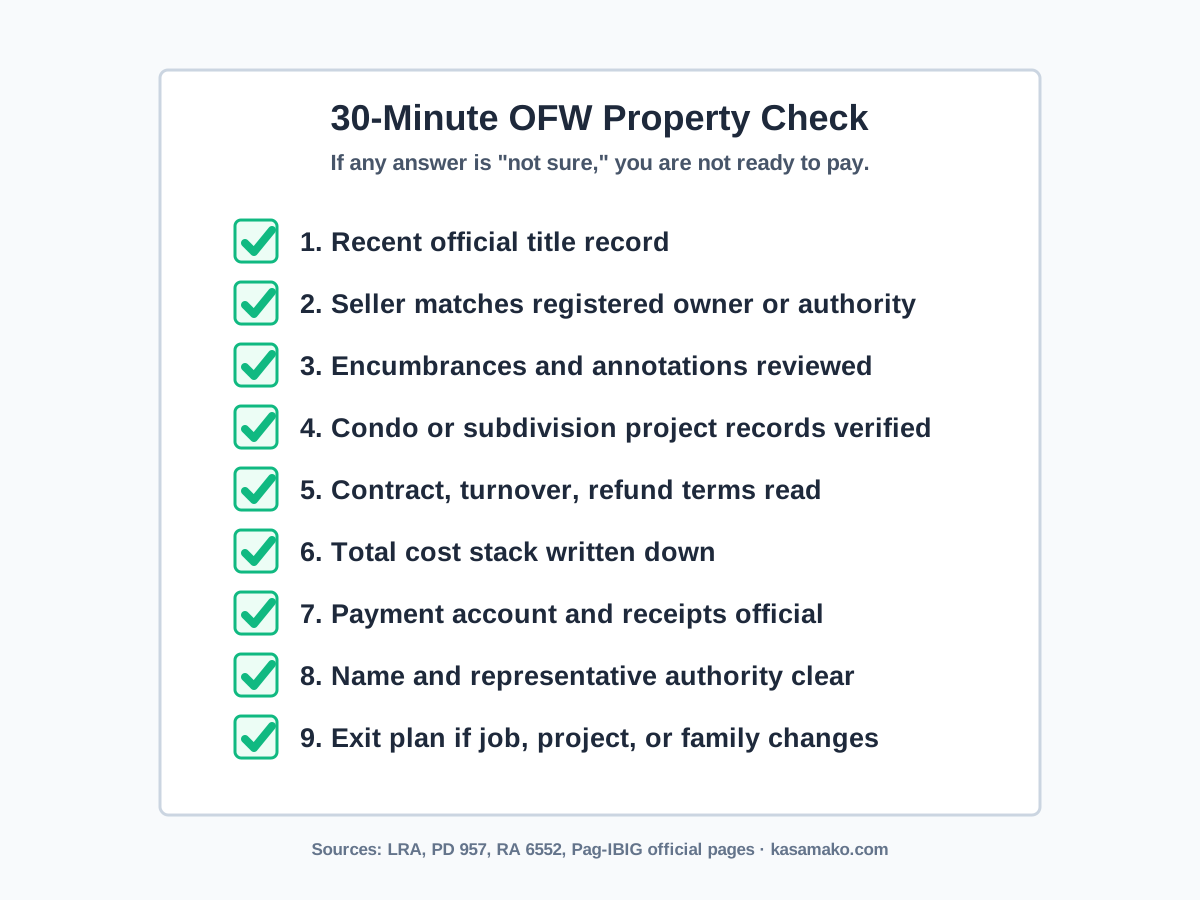
- Title: Have I seen a recent official title record or certified true copy?
- Seller: Does the registered owner match the person or company selling?
- Encumbrances: Has someone checked mortgages, liens, adverse claims, and annotations?
- Project records: For condo/subdivision, have I verified the project and license to sell details?
- Contract: Have I read the payment, turnover, cancellation, and refund terms?
- Total cost: Have I listed taxes, fees, dues, insurance, repairs, remittance costs, and emergency buffer?
- Payment trail: Am I paying the correct legal account with official receipts?
- Name and authority: Is the property in the right name, and does any representative have narrow written authority?
- Exit plan: Do I know what happens if I cannot continue, the project delays, or my overseas job changes?
If any answer is “not sure,” you are not ready to pay. You are ready to ask.
Three Scenarios
Land in the province. Mira’s aunt finds a cheap lot. The seller asks for a quick deposit. Mira does not pay until the Registry of Deeds route, seller authority, and annotations are checked.
Pre-selling condo near a future school. Jun likes a condo because the equity payment fits his salary in Qatar. Before reserving, he checks the license to sell details, contract, turnover schedule, and full cost stack. He lowers the unit size instead of betting every month on perfect income.
House bought through a sibling. Grace works in Hong Kong, so her brother helps. Instead of putting everything under his name “temporarily,” she gets legal advice, prepares narrow authority, sends payments only to official accounts, and keeps receipts.
FAQ
Should I buy through a sibling because I am abroad?
A sibling can help inspect or coordinate, but be careful about putting the property under their name or giving broad signing authority. Get legal advice, keep authority narrow, and keep the payment trail clean.
Is pre-selling property safe for OFWs?
It can be legitimate, but it is not the same as a finished property. Verify the project records, license to sell, contract, turnover schedule, and what happens if the developer delays.
Do I need a lawyer before buying property in the Philippines?
For a serious purchase, yes, budget for professional review. A lawyer can read the title, annotations, contract, authority documents, and cancellation terms.
Can OFWs use Pag-IBIG for a housing loan?
Possibly, if you meet the current membership, contribution, income, document, property, and borrower requirements. Confirm eligibility before treating a loan as part of your budget.
What if I already paid a reservation fee?
Gather the agreement, receipts, transfer proof, messages, seller details, project details, and any contract you signed. Ask the seller in writing about cancellation or refund options before paying more.
What Kasamako Is Building
OFW property decisions are often made from a dorm room, a staff accommodation bed, or a break-time phone call while everyone back home is already excited. Kasamako is being built for that moment: clear checklists and plain-language money guides before the money leaves your account.
If you want to know what ships next, join the early-access list. No spam, no selling your data.
Sources and a Word About Me
The sources behind this piece:
- Land Registration Authority - Registry of Deeds Directory and LRA eSerbisyo - official entry points for Registry of Deeds and land-record services
- Presidential Decree No. 957 - subdivision and condominium buyer-protection framework, including registration, license to sell, advertising, development, contract registration, and title-delivery provisions
- Republic Act No. 6552 - Realty Installment Buyer Act, commonly called the Maceda Law
- 1987 Philippine Constitution - Article XII provisions on land transfer and natural-born citizens who lost Philippine citizenship
- Pag-IBIG Fund Housing Loan - official housing loan information page to check live requirements
Related reading:
- OFW Lifestyle Inflation: How to Stop Being the Family ATM - property back home can be the graduation plan, but only if the title, math, and family-name risks are clean
- The 3 Hidden Fees in Every Philippines Remittance Service - large property payments magnify hidden FX fees
- POEA Placement Fee: What’s Legal and How to Recover an Overcharge - do not start a mortgage while recoverable deployment money is still missing
Kasamako (in development): Join the early-access waitlist
I’m building Kasamako because OFWs deserve clear answers about their own money. I’m a software developer, not a lawyer, licensed broker, tax adviser, or financial adviser. This article is educational, not legal, tax, investment, or lending advice. Confirm live rules, property records, contract terms, and your own eligibility before acting.
No affiliate links. No paid placements. No one here is selling you a property or a loan.
Buy the house only after the paper can carry the dream. Ingat lagi.
Comments