The Headline Says 2-Year Visa. Which Document Changed?
The headline says “2-year visa.” Your recruiter says, madali na. Your cousin in Dubai says, “Just enter first, then find work.”
Those three sentences can describe three completely different legal realities.
In the UAE, the document that lets you enter, the residence file that lets you stay, the permit that lets you work, and the contract that ties you to an employer are connected - but they are not the same thing. If you treat them as one document, you can pay for the wrong route, resign before your paper trail is ready, or start work on a status that was never meant for regular employment.
So before you make a plan around the “2-year visa change,” slow down and ask a better question:
Which document changed - entry, residence, work permit, or job transfer?
Jump to what you need:
- Applying from the Philippines? -> If you are applying from the Philippines
- Already in the UAE and changing jobs? -> If you are already in the UAE and changing jobs
- Someone told you to enter first and work later? -> If someone says enter first work later
- Need a checklist before paying or resigning? -> The paper trail checklist
This is not legal advice. It is a document map for OFWs who are being rushed by headlines, recruiters, or group-chat advice.
Separate Entry, Residence, Work Permit, and Contract
The safest way to understand the UAE system is to stop saying “visa” as if it means one thing.
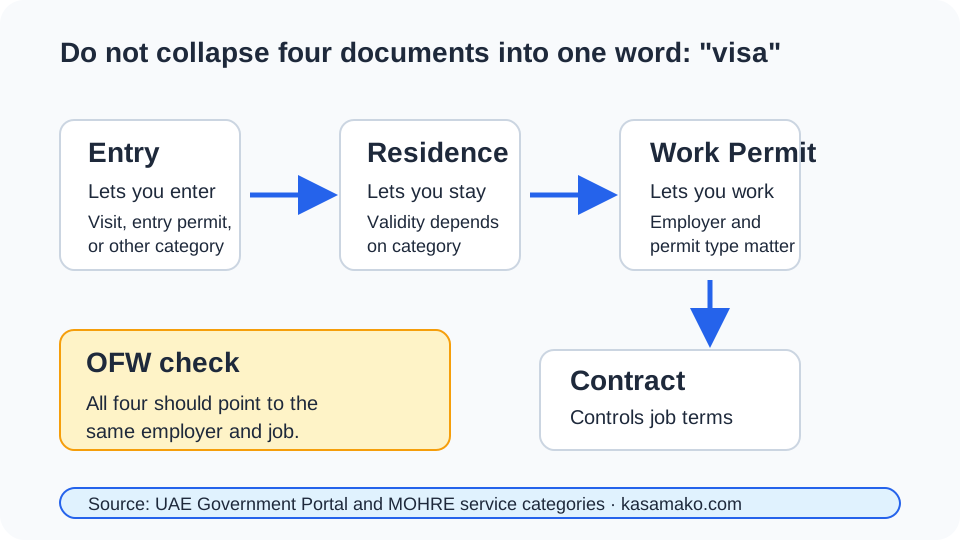
Entry permission is the door into the country. It can be a visit visa, visa-on-arrival access for eligible travelers, an entry permit connected to employment processing, or another category. Entry permission is not automatically permission to start a job.
Residence visa is the right to remain in the UAE under a particular basis, such as employment, family sponsorship, study, or another residence category. The UAE government portal explains residence visas as the formal status that allows expatriates to live in the country, with categories and validity depending on the sponsor and purpose (UAE Government Portal).
Work permit is the labor-side permission to work. For private-sector employment, the Ministry of Human Resources and Emiratisation (MOHRE) lists work-permit services such as new work permits, transfer permits, temporary permits, part-time permits, and mission permits (MOHRE services).
Employment contract is the agreement that controls your job terms: employer, salary, job title, work location, leave, notice, and contract period. UAE labor rights and obligations are grounded in Federal Decree-Law No. 33 of 2021 and its implementing rules, which MOHRE publishes in its laws section (MOHRE laws and regulations).
These four documents should point in the same direction. If the recruiter says “2-year UAE visa” but cannot show the employer, job offer, contract route, and work-permit path, you do not yet have a work plan. You have a phrase.
What the 2-Year Headline May Mean
Here is the clean version: for a normal private-sector job, the important question is usually not “Do I have a 2-year visa?” It is:
Do I have the correct employment route, with the correct employer, and a valid work permit attached to the job I will actually do?
MOHRE’s service directory is the better place to start than a social-media post. It separates different permit types because they do different jobs. A new overseas work permit is not the same as a transfer permit. A mission work permit is not the same as normal long-term employment. A temporary or part-time permit is not the same as a full employment relationship.
That distinction matters because “two years” can show up in more than one place:
- a standard employment cycle people casually call a 2-year UAE work visa;
- a MOHRE work-permit route connected to a named employer;
- a residence validity period that depends on sponsor/category;
- or a recruiter headline that is using “2-year visa” as bait without explaining the legal category.
There have also been reports about UAE work-assignment or mission-style visa changes. Treat those carefully. MOHRE’s mission work permit service is a specific permit type, not a blanket replacement for employment sponsorship (MOHRE mission work permit service). If a recruiter uses “mission,” “visit,” or “2-year assignment” language, ask them to identify the exact government category and whether it authorizes the work you are being asked to perform.
The rule of thumb is simple: a visa headline is not enough. The category decides what you can legally do.
If You Are Applying From the Philippines
If you are still in the Philippines, your risk is not only the UAE rule. Your risk is the gap between Philippine-side deployment papers and UAE-side employer papers.
Before you pay anything or leave your current job, ask for this chain:
- the exact name of the UAE employer;
- the job title and salary in writing;
- the licensed Philippine recruitment agency, if an agency is involved;
- the UAE work-permit or employment processing route;
- the employment contract you are expected to sign;
- the DMW/OEC processing path on the Philippine side.
Do the Philippine-side check first. The DMW maintains a live list of licensed recruitment agencies; if the agency is not there, the “2-year UAE visa” promise should stop immediately (DMW licensed recruitment agencies).
This is where contract discipline protects you. If the UAE document says one employer but the Philippine contract says another, if the salary changes between versions, or if the recruiter tells you “the real contract comes later,” treat it as a contract-substitution warning. I wrote a full guide to that pattern here: Contract Substitution: How to Spot Switched OFW Contracts.
The line to remember:
If the visa promise is real, it can survive a document check.
If You Are Already in the UAE and Changing Jobs
If you are already working in the UAE, “2-year visa” talk can become dangerous in a different way. Workers sometimes hear “you can change jobs now” and resign before the new employer’s paperwork is ready.
Do not make that jump on group-chat advice.
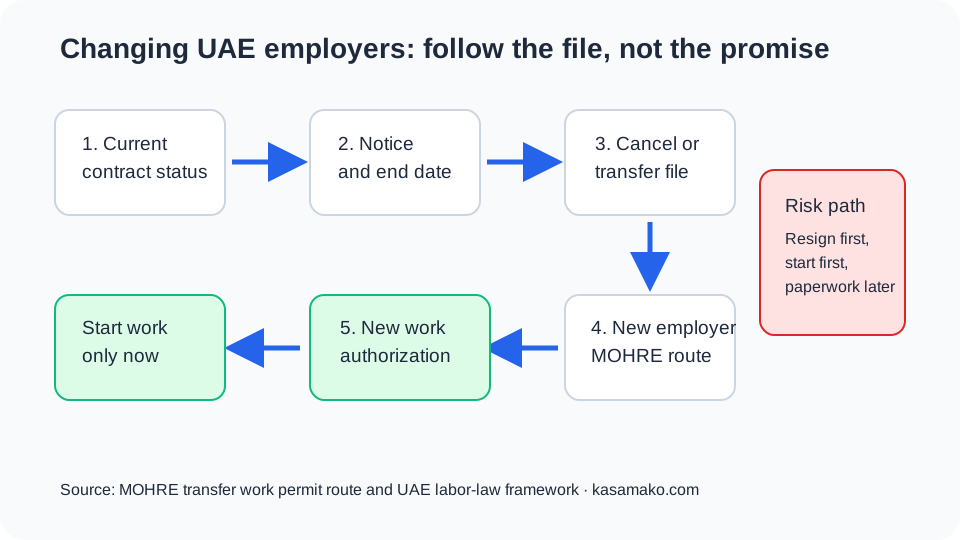
Your clean path is a sequence:
- Know your current contract status.
- Follow the notice and termination rules that apply to your contract.
- Get cancellation or transfer paperwork handled properly.
- Make sure the new employer applies through the proper MOHRE route.
- Do not start the new job until the work authorization is in place.
MOHRE has a dedicated transfer work permit service for moving a worker from one establishment to another (MOHRE transfer work permit service). That is different from just finding a new boss and showing up.
In 2026, UAE media also reported a MOHRE clarification that workers who finish their contracts can move legally, but violations can create work-permit consequences, including a reported one-year restriction in some cases. Because this is the kind of rule where your exact facts matter, do not rely on a single article or a recruiter explanation. Check the live MOHRE service rules, ask the new employer what route they will file under, and keep screenshots of every approval.
The safe sentence is:
I am not changing employers until my old file, my notice, and my new permit route all line up.
If Someone Says Enter First Work Later
This is the line that gets OFWs in trouble:
“Tourist visa muna. Pagdating mo, ayusin natin work permit.”
Sometimes people do convert status legally. Sometimes employers do start a proper application after arrival. But as advice, “enter first, work later” hides the part that matters: you still need the correct work authorization before you actually work.
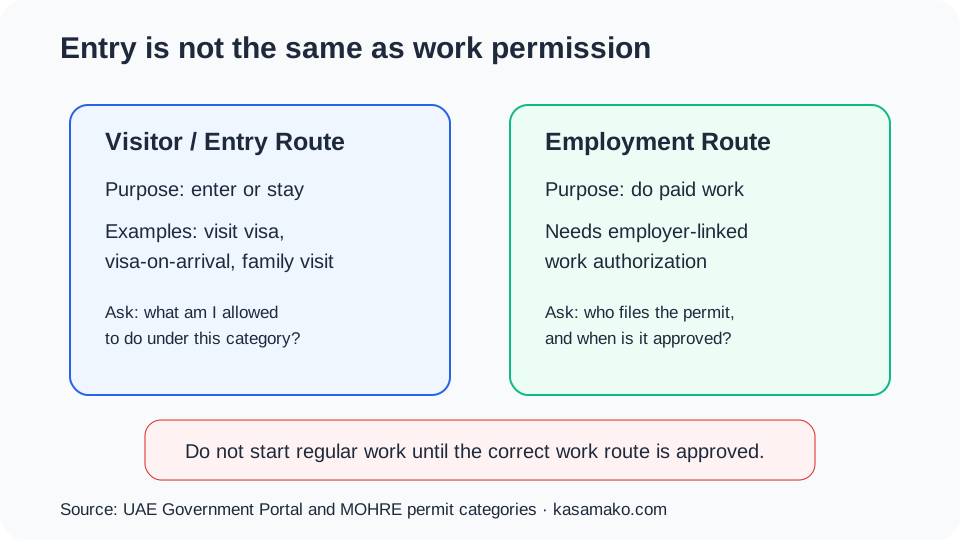
A visitor status, visa-on-arrival access, or family visit route is about entry and stay. A job is about labor authorization. If you start working before the work route is complete, you carry the risk: unpaid wages, no clean complaint trail, overstay problems if the promise collapses, and pressure to accept whatever contract appears later.
If the offer is real, ask these questions before flying:
- What exact visa or entry category am I using?
- What exact work-permit category will the employer file?
- When will the employment contract be issued?
- Who pays for status change, medical, Emirates ID, and related processing?
- What happens if the employer does not file after I arrive?
- Is a DMW-licensed agency involved, and is there a verified job order?
If they answer with urgency instead of documents, slow down.
The Paper Trail Checklist
Before you resign, fly, pay, or start work, collect the documents that make the promise real.
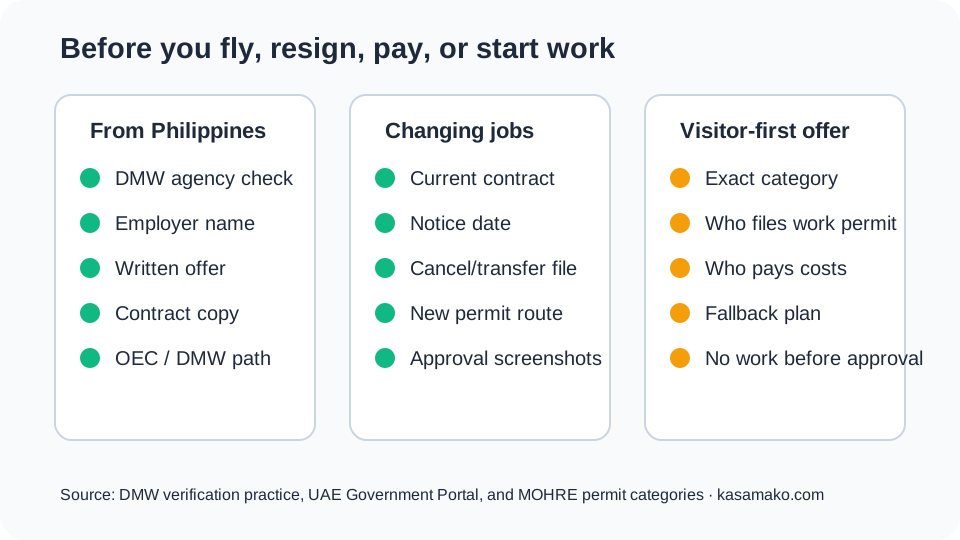
Before flying from the Philippines:
- DMW-licensed agency check, if an agency is involved.
- Employer name, address, and contact.
- Written job offer with salary, job title, and work location.
- Contract copy you can photograph and send to family.
- OEC or DMW processing instructions for your case.
- MWO Abu Dhabi or MWO Dubai contact saved offline.
Before changing employers in the UAE:
- Current contract and notice obligations.
- Cancellation, transfer, or end-of-contract paperwork.
- New employer’s written offer.
- MOHRE application or approval screenshots.
- Emirates ID/residence status check.
- Wage and message records from both employers.
Before accepting a visitor-first route:
- A written explanation of when and how employment authorization will be filed.
- Proof that the employer exists and is the same employer named in the offer.
- A budget for what happens if the job does not materialize.
- A refusal line ready: “I cannot start work until the proper permit is approved.”
This checklist is boring on purpose. Boring documents are what protect you when a friendly promise turns into a dispute.
Red Flags in UAE Visa Offers
The scam version of a UAE visa offer usually sounds confident and simple. Real immigration and labor processing sounds specific.
Red flags:
- “Guaranteed 2-year UAE visa” with no named employer. A real work route has an employer and a category.
- “No contract needed yet.” If there is no contract, there is no salary you can enforce.
- “Tourist visa first, job later” plus an upfront fee. That is not a deployment plan. It is a risk transfer to you.
- Payment to a personal wallet or personal bank account. Real fees need official receipts and a legal basis.
- A recruiter who refuses the DMW license check. Legitimate recruiters expect verification.
- Different employer names across documents. That is how contract substitution starts.
- Urgency language. “Last slot today” is not how a clean overseas job should be sold.
If the offer came through TikTok, Facebook, WhatsApp, or Telegram, read this next before sending money: How to Spot an Illegal OFW Recruiter on TikTok.
Three Realistic Scenarios
These are fictional composites, not legal advice. Use them to spot the decision point in your own case.
Ana, new hire from Manila. Ana is told she has a “2-year UAE visa” ready. She asks for the employer name, contract, DMW agency license, and work-permit route. The recruiter sends only a flyer and a payment deadline. Ana walks away. The important clue was not the word “UAE.” It was the missing employer.
Mark, finishing a Dubai contract. Mark’s new employer wants him to start next Monday. His old employer has not completed cancellation, and he has no new MOHRE approval yet. Mark does not start. He waits until the transfer route is clean. He may feel slow, but he is protecting his ability to work legally.
Liza, visiting family in Sharjah. Liza enters as a visitor and interviews with a salon. The owner says, “Start tomorrow, papers later.” Liza asks for the employment route first. If the employer is serious, they will process the authorization. If they get angry, the anger is useful information.
In every scenario, the safe move is the same: match the document to the promise before you act.
FAQ
Is the UAE really giving OFWs a new 2-year visa in 2026?
Be careful with that wording. “2-year visa” can refer to employment residence language, work-permit validity, or a recruiter headline. The practical question is whether your exact UAE category allows the work you plan to do, with the employer named in your documents.
Can I work in the UAE on a visit visa or visa-on-arrival?
Do not treat entry permission as work permission. Visitor entry lets you enter or stay under a visitor category. Regular employment needs the proper employer-linked work authorization. Check the live UAE and MOHRE rules for your exact case before starting work.
Can I change employers after my UAE contract ends?
Often, yes, if the change is handled through the proper route and your contract/notice/cancellation documents are clean. But the details matter. Use MOHRE’s transfer process and do not rely only on the new employer’s verbal promise.
What should I ask a UAE recruiter before paying?
Ask for the DMW-licensed agency name, UAE employer name, job title, salary, contract copy, work-permit category, and official receipt basis for any fee. If they cannot answer those, do not pay.
What if my UAE documents do not match my Philippine contract?
Stop and document the mismatch. Photograph both versions, keep messages, and contact MWO/DMW before signing a worse replacement. That is exactly the pattern covered in the contract substitution guide.
What Kasamako Is Building
This is the kind of confusion Kasamako is meant to reduce. A worker should not need to understand four government systems just to answer one basic question: is this job route real?
I’m building tools that turn messy documents into a plain-language checklist: employer name, contract terms, permit route, fee risk, and what to verify before you pay or resign. If that would help you or someone in your group chat, join the early-access list. No spam, no paid placement, no selling your data.
Sources and a Word About Me
Official sources to verify your own file:
- UAE Government Portal - Residence visas
- MOHRE services directory
- MOHRE transfer work permit service
- MOHRE mission work permit service
- MOHRE laws and regulations
- DMW - List of Licensed Recruitment Agencies
- DMW main site
- DMW MWO Directory
Related reading:
- Contract Substitution: How to Spot Switched OFW Contracts - if the UAE promise and written contract do not match, start here.
- How to Spot an Illegal OFW Recruiter on TikTok - many fake UAE offers begin as “fast visa” ads.
- POEA Placement Fee: What’s Legal and How to Recover an Overcharge - if a licensed agency charged you more than allowed.
I’m building Kasamako because OFWs deserve calm, accurate guidance before someone rushes them into a life-changing document. I’m a software developer, not a lawyer, immigration consultant, recruitment agency, or labor attaché. This article is educational, not legal advice. UAE and Philippine rules change; verify your own file with MOHRE, ICP/GDRFA where relevant, DMW/MWO, and your employer before acting.
No affiliate links. No paid placements. Check the paper before you make the move. Ingat lagi.
Comments